
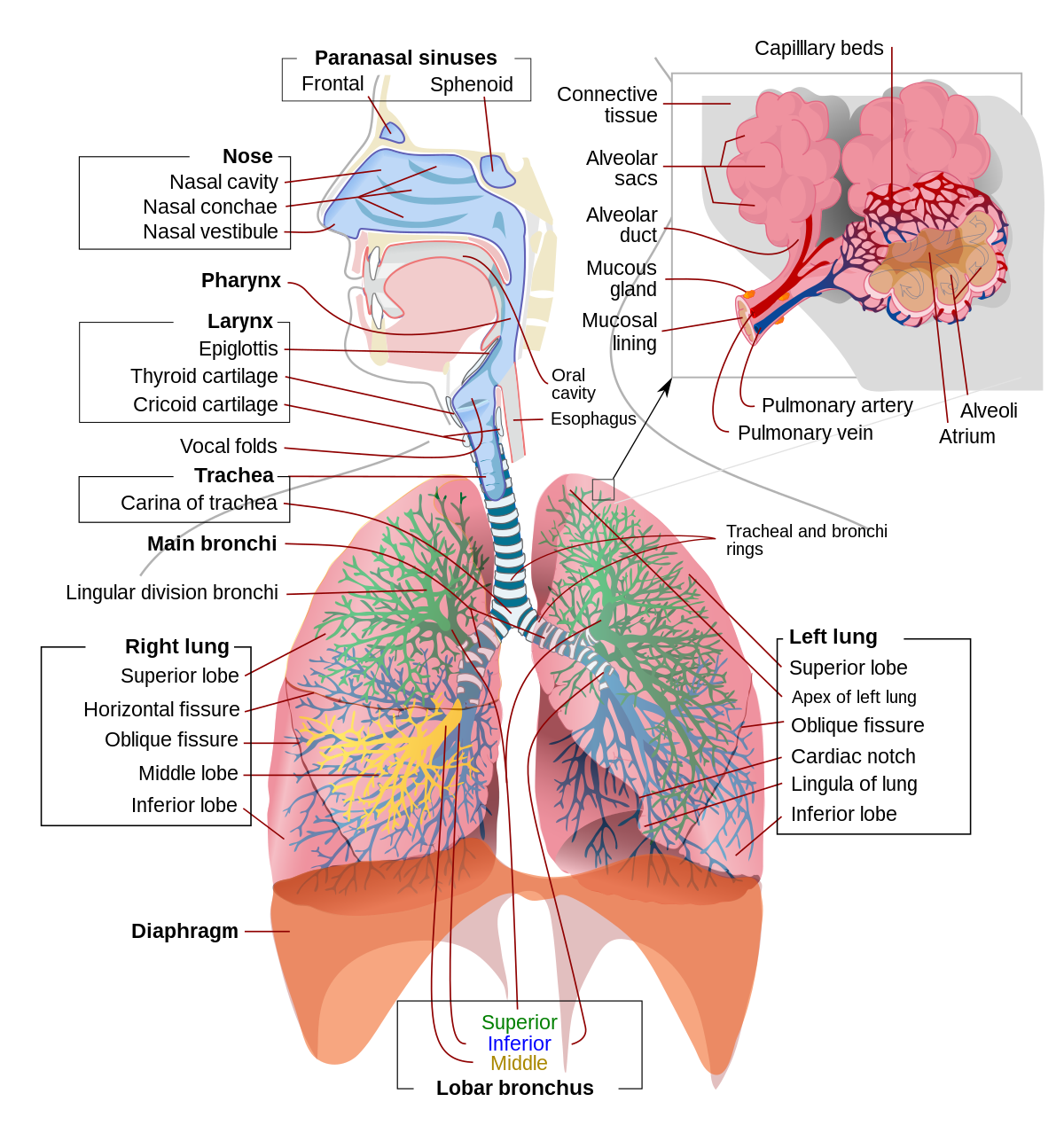
The respiratory system is essential for supplying oxygen to the body and removing carbon dioxide. Here's an overview of its anatomy, functions, and key components:
🫁 Anatomy of the Respiratory System
The respiratory system comprises two main parts:
-
Upper Respiratory Tract: Includes the nose, nasal cavity, sinuses, pharynx (throat), and larynx (voice box)
-
Lower Respiratory Tract: Consists of the trachea (windpipe), bronchi, bronchioles, lungs, and alveoli.
The lungs are divided into lobes—three on the right and two on the left to accommodate the heart. They are protected by a pleural membrane and contain millions of alveoli, tiny air sacs where gas exchange occurs.
🔄 Functions of the Respiratory System
-
Gas Exchange: Oxygen from inhaled air enters the bloodstream through alveoli, while carbon dioxide is expelled from the body during exhalation.
-
Regulation of Blood pH: By removing carbon dioxide, the respiratory system helps maintain the acid-base balance of the blood.
-
Protection: The system filters, warms, and moistens incoming air. Mucociliary clearance, aided by cilia and mucus, traps and removes pathogens and debris.
-
Voice Production: Air passing through the larynx vibrates the vocal cords, enabling speech.
-
Olfaction: The system facilitates the sense of smell by allowing air to reach olfactory receptors in the nasal cavity.
🧠 Breathing Mechanism
Breathing is controlled by the diaphragm and intercostal muscles. During inhalation, the diaphragm contracts and moves downward, expanding the chest cavity and drawing air into the lungs. Exhalation occurs when these muscles relax, expelling air from the lungs.
⚠️ Common Respiratory Conditions
-
Asthma: Characterized by inflamed and narrowed airways, leading to wheezing and shortness of breath.
-
Chronic Obstructive Pulmonary Disease (COPD): A progressive lung disease causing breathing difficulties.
-
Pneumonia: An infection that inflames the alveoli, leading to symptoms like cough, fever, and difficulty breathing.
-
COVID-19: A viral infection that can cause severe respiratory issues.
Early detection and treatment are crucial for managing these conditions effectively.
If you're interested in a visual representation of the respiratory system, here's an informative diagram:
too good
ReplyDeleteGood...
ReplyDelete